

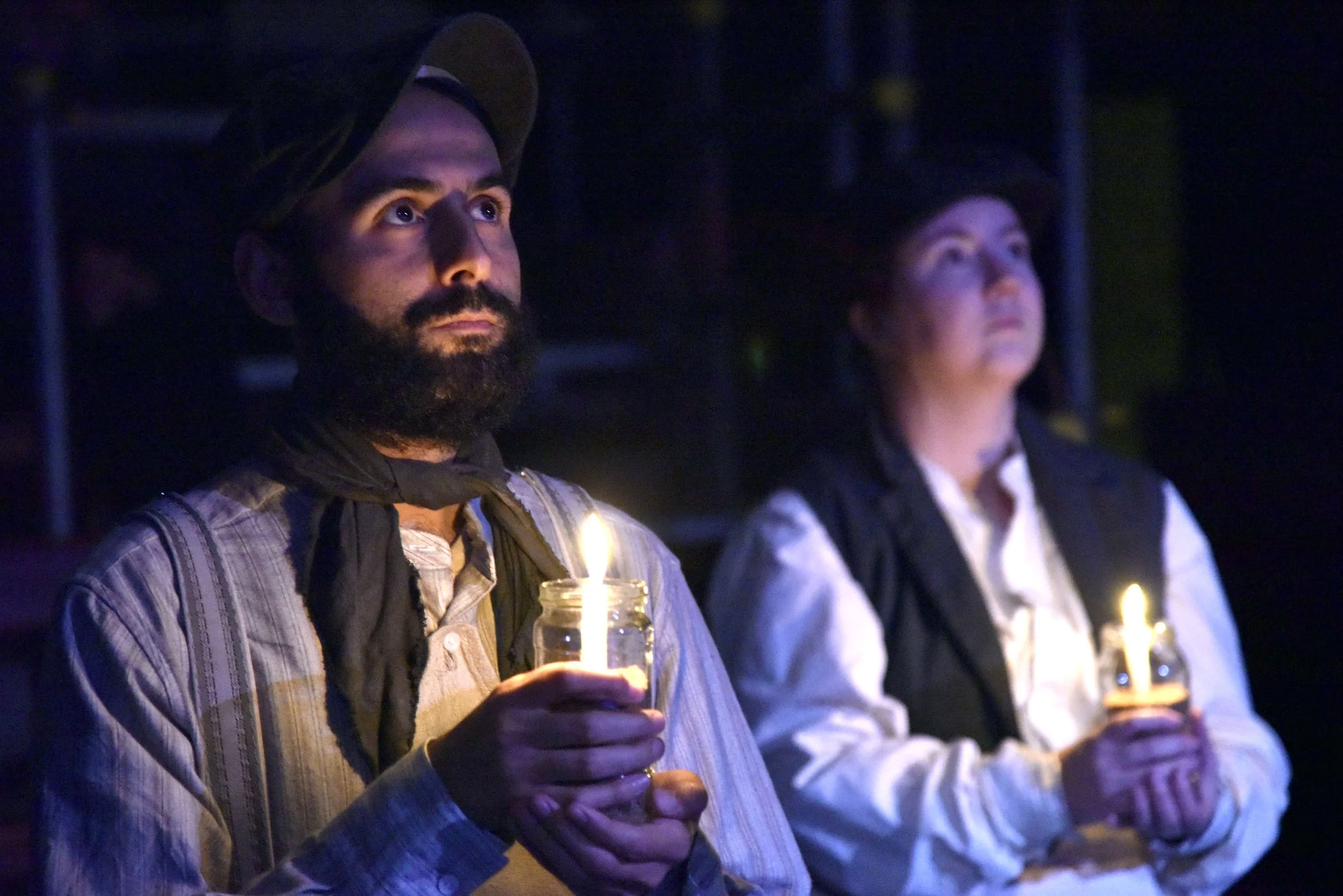
The Ragged Trousered Philanthropists
They paint the houses of the wealthy but they can’t afford to heat their own.
Stephen Lowe’s adaptation of The Ragged Trousered Philanthropists follows the original narrative of Robert Tressell's radical classic, a group of painters and decorators scraping a living. The work is hard, the pay is poor and unemployment is always close.
Among them is Frank Owen, a worker who sees the system for what it is. While the others blame bad luck, foreign workers or themselves, Owen tries to show them who really benefits from their labour. Through argument and humour, he exposes how wealth is created by workers and taken by those who own the job. But the truth is not always welcome. The men are tired, frightened and desperate to keep working. Solidarity is difficult when everyone is competing for the next wage.
Ensemble '84 brings the story to Horden through a contemporary lens, and its questions remain urgent. Who creates the wealth? Who takes the profit? Why are the people doing the work still expected to be grateful?
Funny, angry and sharp, The Ragged Trousered Philanthropists is a story about work, poverty, friendship and the struggle to imagine a fairer world.
Robert Tressell, a pseudonym for Noonan, was born in Dublin in 1871 of a middle-class family. In his late teens he left for South Africa, where he worked as a signwriter and housepainter. Returning to England at the turn of the century, with his young daughter, Kathleen, he made what living he could by his trade in Hastings. Housepainters were severely hit by the economic depression.
He died in 1911, killed by tuberculosis, and was buried in an unmarked pauper's grave. In a savagely abridged version his book came out on the eve of war, in August 1914, the full text not being rediscovered and published until 1956, thanks largely to the single-minded dedication of his biographer, F. C. Ball. Against all the odds, the book has attained the status of the first major novel on the British working classes, and has become a classic.
‘The carpenter eats bread and meat
The bricklayer bread and cheese
But pity the poor painter
When the leaves fall off the trees.’
In 1906, skilled painters could earn £1.5s. in a good week, but they suffered from seasonal lay-offs and were not compensated for bad weather or daylight working restrictions.
Creative Team
Director – Mark Dornford-May
Associate Director - Max Roberts
Design & Construction – Kevin Brown
Costume - Janet Brown
Stage Manager - Eve Booth
Photography - Keith Pattison
Music - Traditional and the ensemble
Cast
Mia Cummings - Rushton
Brodie Jobson - Harlow
Joseph Hammal - Owen
Wendy Hindmarch - Crass
Keith Irons - Philpott
Stephen Lister - Hunter
Sophie Moss - Bundy
Willow Pearson - Kathleen /boy
Erin Thwaites - Easton
Balder Nieto - Sawkins
Jennifer Revell - Linden
All other parts played by members of the ensemble